The ZX Spectrum – A Legend of 1980s Computing
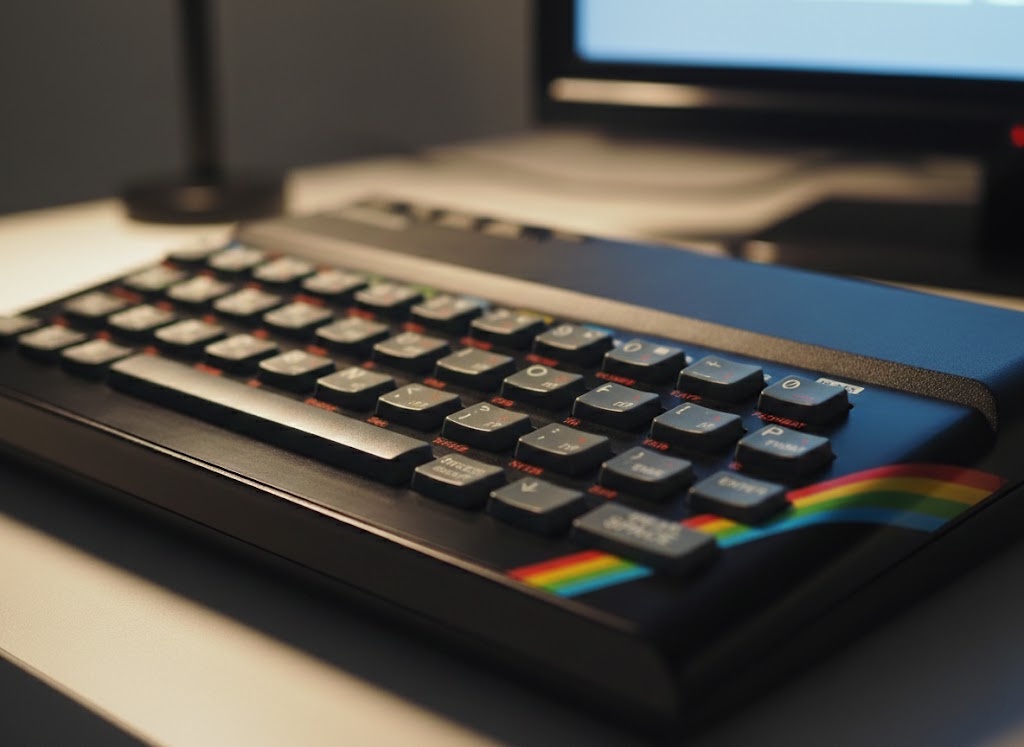
The ZX Spectrum stands as one of the most influential home computers ever created. Launched by Sinclair Research in April 1982, this humble machine with its rubber keyboard and modest specifications would go on to shape the childhoods of millions and lay the foundation for the British games industry.
A Computer for Everyone
At a time when computers were the domain of hobbyists and businesses, Sir Clive Sinclair’s vision was radical: create a capable computer that ordinary families could afford. The ZX Spectrum achieved this with remarkable elegance. Priced at just £125 for the 16KB model (later £175 for the 48KB), it was accessible to the masses while delivering genuine computing power.
The machine’s design was quintessentially British — compact, practical, and unpretentious. That rubber keyboard, often mocked by later reviewers, was actually a smart cost-saving measure that kept the price down without sacrificing usability.
Technical Specifications
- Processor: Zilog Z80A running at 3.5 MHz
- Memory: 16KB or 48KB of RAM
- Display: 256 × 192 pixels in 15 colours (plus black)
- Storage: Compact cassette tape
- Sound: Basic beeping and bleeping through an integrated speaker
- Expansion: Cartridge slot, printer port, and mic/speaker connectors
These specs sound laughable by modern standards, yet developers coaxed extraordinary things from this limited hardware.
Gaming Glory
If the Spectrum had only been a modest office computer, it would barely be remembered. But as a gaming platform, it was revolutionary. The machine’s graphics capabilities, though simple, were perfect for arcade games — and Britain’s independent game developers seized the opportunity.
Iconic Titles
- Manic Miner (1983) – Matthew Smith’s platformer set the standard for Spectrum games
- Jet Set Willy (1984) – The surreal, interconnected level design was years ahead of its time
- The Ultimate Play the Game series – Titles like Knight Lore pioneered isometric game design
- Dizzy series – Oliver Twin’s charming platformers became a cultural phenomenon
- Elite (1985) – A space trading game that defined the genre on every platform
The creativity was staggering. With just 48KB of RAM, developers created intricate game worlds, compelling stories, and addictive gameplay. The Spectrum proved that hardware limitations were merely a canvas for creativity.
The Rubber Keyboard Experience
Much has been written about typing on the Spectrum’s membrane keyboard. It was genuinely dreadful for serious computing — mushy, imprecise, and prone to accidental keypresses. Yet for gaming, it hardly mattered. Games used joystick interfaces, making the keyboard irrelevant.
This was actually brilliant product design: the Spectrum prioritized what it would be best known for (gaming) and made acceptable compromises elsewhere.
A Cultural Icon
By the mid-1980s, the Spectrum had become deeply embedded in British culture. Computer magazines like Crash! and Sinclair User were essential reading. Visiting a mate’s house meant plugging in a cassette and waiting five minutes while the dreaded loading screen filled with colour blocks — an anxious time wondering if the game would actually load.
The Spectrum created a generation of bedroom programmers. Young developers didn’t need expensive equipment — they had a Spectrum, a cassette recorder, and ambition. This democratization of game development gave Britain’s software industry a decade-long head start.
The Legacy
The ZX Spectrum was officially discontinued in 1992, but its cultural impact endures. The machine’s limitations forced developers to innovate, resulting in games that feel distinctly “Spectrum” — a particular aesthetic that fans cherish to this day.
Modern indie developers continue releasing new games for the Spectrum. Emulation communities keep the machine alive, and original hardware commands respectable prices in the second-hand market. Gaming historians recognize the Spectrum as a turning point: the moment home computers became entertainment devices first and office tools second.
Conclusion
The ZX Spectrum wasn’t the most powerful computer, nor the most elegant. But it was the right computer at the right moment. It was affordable, cheerful, and fun. Most importantly, it proved that mass-market computing was possible — and that computers could be tools for entertainment and creative expression.
If you’ve ever experienced the childhood joy of loading a Spectrum game, the frustration of the cassette not loading, and the triumph when it finally worked, you’ll understand why this little rubber-keyboard machine still commands such affection nearly 45 years later.